Why is the Cologne Cathedral black
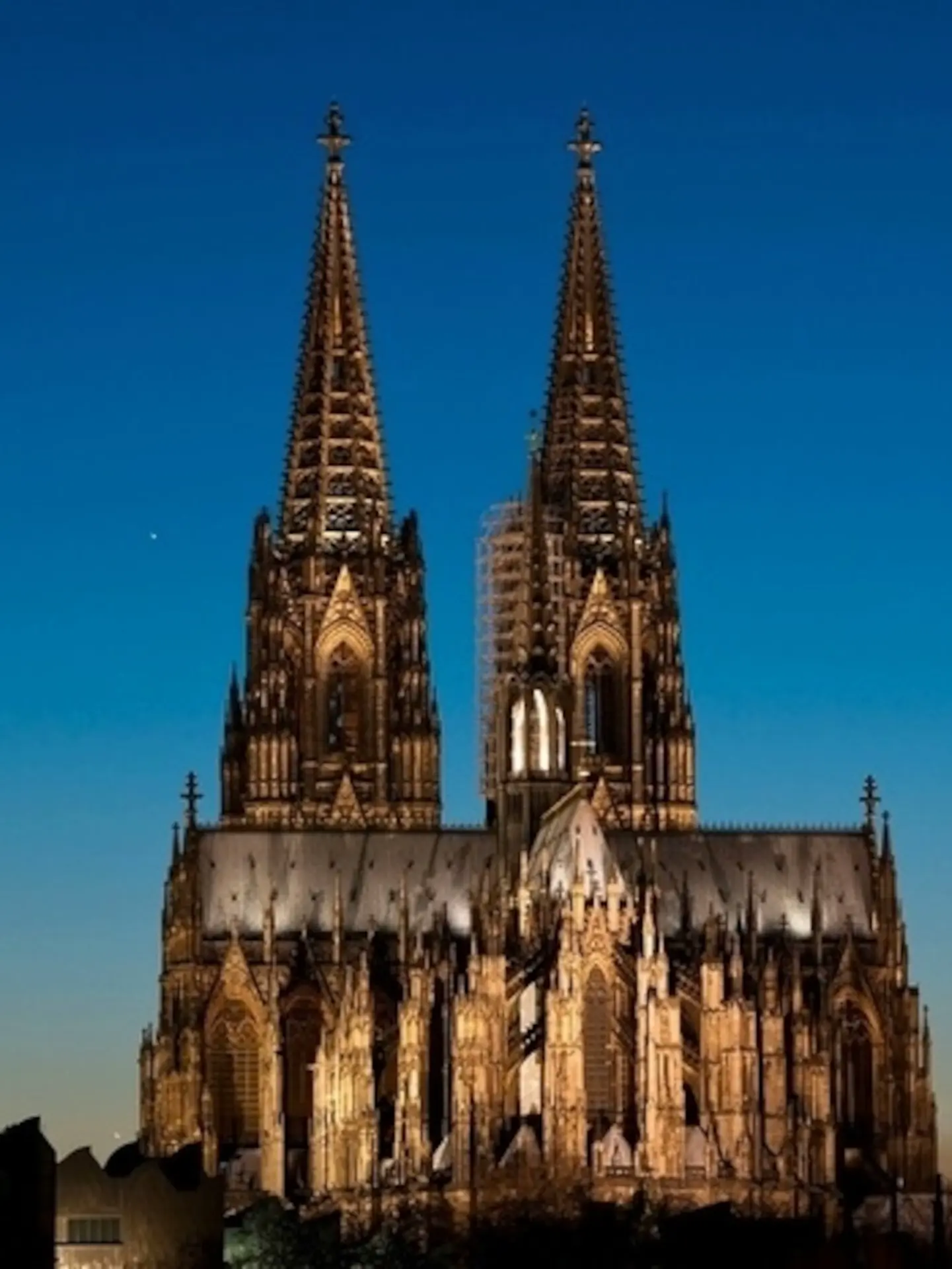
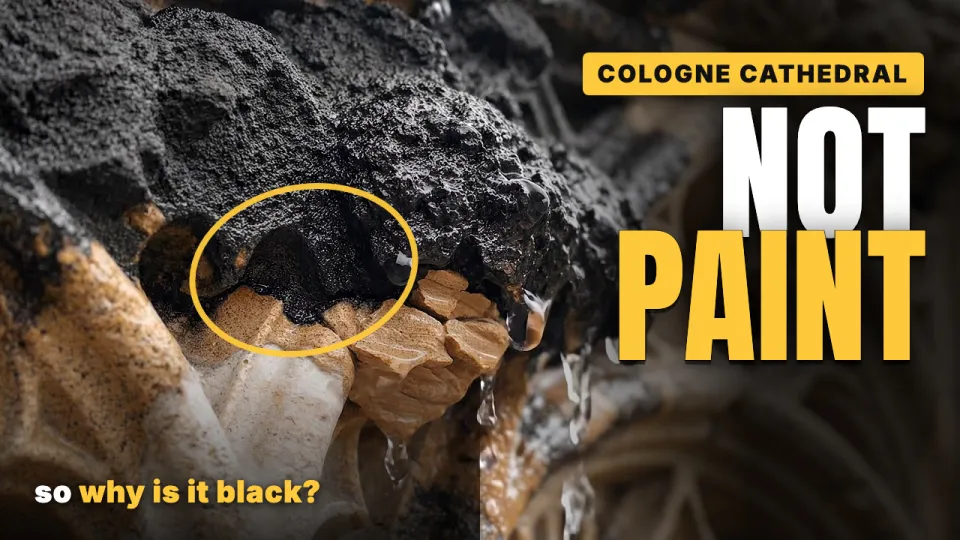
The cathedral is not painted black. The stone carries a dark gypsum crust that formed as weather, acid rain and decades of coal smoke reacted with the surface. Underneath, the stone is a light tan and grey. Where the workshop has cleaned or replaced blocks, that pale colour comes straight back — which is why the building is patchy rather than uniformly dark.
Why Cologne Cathedral is black: what actually happens to the stone
The short version is that the surface chemistry changed. Sulphur compounds in polluted air react with the stone's surface and form a crust of gypsum. That crust is sticky and porous, so airborne soot particles embed in it and stay there. The result is a hard, dark skin sitting on top of pale stone.
Two details make Cologne a particularly strong example:
- Industrial Rhineland air. Cologne spent well over a century surrounded by coal-burning industry and heavy rail traffic, both of which put sulphur and soot into the air the building stands in.
- Rain patterns. Surfaces washed by rain stay comparatively clean. Sheltered surfaces — under cornices, inside carved detail, beneath overhangs — never get rinsed, so the crust thickens most exactly where the stonework is most ornate.
Why is the Cologne Cathedral so dark compared to other cathedrals
Some of it is genuinely local pollution history. But part of the answer is the stone itself. The medieval fabric uses Drachenfels trachyte, a dark volcanic rock that starts out considerably darker than the pale limestones used in many French and English cathedrals. The building had a head start on looking sombre before any soot arrived.
The 19th-century sections used lighter Obernkirchen sandstone, so the cathedral has been two-toned by design since long before pollution was the main story. We break the stone types down in what Cologne Cathedral is made of.
Was it always this colour?
No. Contemporary accounts and the appearance of freshly cut replacement stone both point the same way: the original surfaces were a light tan and grey. The darkening accumulated over centuries and accelerated sharply during the industrial period.
| Surface | How it looks | Why |
|---|---|---|
| Untouched medieval stone | Near-black, matte | Thick gypsum crust with embedded soot |
| Rain-washed faces | Mid grey | Crust partly rinsed away by runoff |
| Recently replaced blocks | Pale cream, sharp edges | New stone, no crust yet |
Is anyone cleaning it?
Yes, continuously — but not all at once. The cathedral's permanent stonemasons' workshop, the Dombauhütte, works through the building section by section, cleaning surfaces and cutting replacement blocks where the stone has decayed past saving. There is no plan for a single full clean, and there is a good argument against one: the crust is partly protective, and newly exposed stone begins weathering immediately.
So the patchwork is permanent. What you photograph today is a snapshot of an ongoing repair cycle that has been running for well over a century.
Is Cologne Cathedral dirty?
Not in the everyday sense. What looks like dirt is a hard gypsum crust with soot locked inside, formed when sulphur pollution reacted with the stone, and in the medieval parts it sits on naturally dark Drachenfels trachyte. It does not rinse off, and scrubbing it all away would expose fresh stone to weathering. The cathedral is not neglected either: the Dombauhütte cleans and repairs it section by section every year, which is why some areas look pale and others nearly black.
Frequently asked questions
Is Cologne Cathedral painted black?
No. No paint, no deliberate colouring. The darkness is a weathering crust on natural stone.
Is the black damaging the building?
The crust itself is not the main threat, and in places it shelters the stone beneath. The damage comes from the same pollution and moisture cycles that create it, working into the stone over time — which is what the ongoing replacement programme addresses.
Does it look black from the inside too?
No. The interior stone is far lighter, and the space reads as tall and pale rather than dark. If you have only seen the exterior, the contrast inside is genuinely surprising. Interior entry is €12 (€6 reduced) — see tickets, or read what is inside the cathedral.
What is the best light for photographing dark stone?
Low, angled light late in the day picks out the carving that flat midday sun flattens into a black mass. More in the photography guide.
Keep reading
- What is Cologne Cathedral made of? — the three stones
- Cologne Cathedral architecture — structure and design
- Cologne Cathedral facts — height, age, numbers
- Photography guide — where and when to shoot