Over 1,050 Years Old

The Gero Crucifix

Gerokreuz • Carved 970 AD

The oldest surviving monumental crucifix in the Western world - a masterpiece of Ottonian art that revolutionized the depiction of Christ in European art.

What Is the Gero Crucifix?

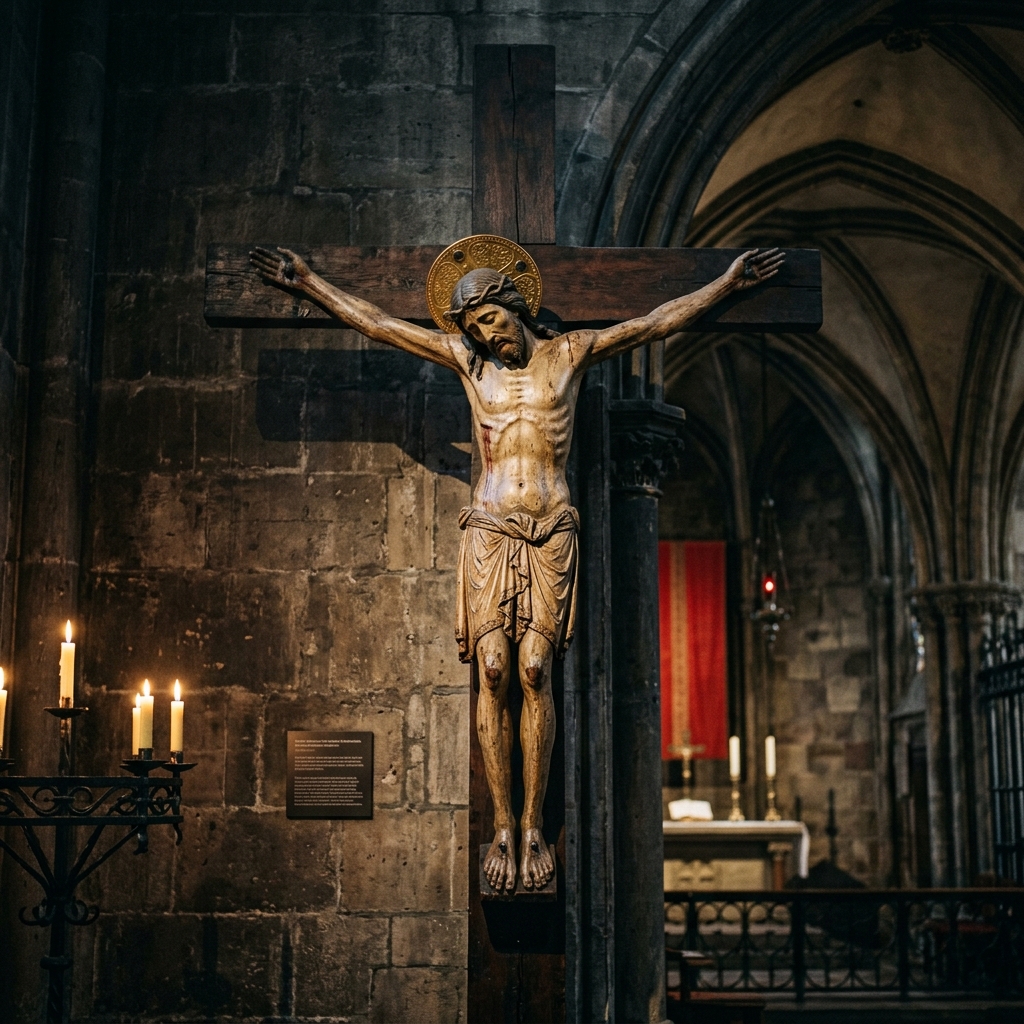
The Gero Crucifix (German: Gerokreuz) is a massive oak sculpture of the crucified Christ, carved around 970 AD during the reign of Archbishop Gero of Cologne (969-976). At 187 cm (6 feet 2 inches) tall, it is the oldest surviving large sculpture of the crucified Christ north of the Alps.

What makes this crucifix revolutionary is its realistic depiction of suffering. Before the Gero Crucifix, Christ was typically shown on the cross as triumphant and kingly, with open eyes and an upright posture. Archbishop Gero commissioned an entirely new approach: Christ's head hangs to one side, his eyes are closed, his body sags from the weight of his arms, and his face shows genuine pain and mortality.

This new artistic vision - emphasizing Christ's human suffering rather than divine triumph - would influence Western Christian art for the next thousand years. Every crucifix you see today owes something to this 10th-century masterpiece.
Date

~970 AD

Ottonian period

Height

187 cm

6 feet 2 inches

Material

Oak Wood

Originally painted

Where to Find the Gero Crucifix

Location

  • Chapel: Kreuzkapelle (Chapel of the Cross)
  • Position: Northern aisle (left side)
  • Direction: Turn left after entering main doors
  • Look for: Baroque sunburst frame (added 1683)

Visitor Info

  • Entry: Free
  • Photography: Yes (no flash)
  • Best time: Early morning
  • Allow: 10-15 minutes

Why It's Historically Significant

Artistic Revolution

First crucifix to show Christ as truly suffering and dead on the cross, rather than triumphant. This "Christus patiens" (suffering Christ) style became the standard for Western art.

Oldest Surviving

The oldest monumental crucifix (over life-size) in the Western world. Earlier examples did not survive, making this unique for understanding 10th-century art.

Miracle Legend

A relic legend states that Archbishop Gero discovered a crack in Christ's head, which miraculously healed when he placed a piece of the Eucharist inside.

Survival

It survived the collapse of the old Carolingian cathedral in 1248 and was transferred to the current Gothic cathedral, where it has remained for over 750 years.

Frequently Asked Questions

What is the Gero Crucifix?

The Gero Crucifix is a large wooden crucifix carved around 970 AD during the reign of Archbishop Gero of Cologne. Standing 187 cm tall, it is the oldest surviving monumental sculpture of the crucified Christ north of the Alps, carved from oak and originally painted and gilded.

Where is the Gero Crucifix located?

The Gero Crucifix is in the Kreuzkapelle (Chapel of the Cross) in the northern aisle of Cologne Cathedral. Turn left after entering the main doors. It is displayed in an elaborate Baroque setting with golden rays from 1683.

How old is the Gero Crucifix?

The Gero Crucifix was carved around 970 AD, making it over 1,050 years old. It is one of the oldest lifesize sculptures of Christ in existence.

Is entry to see the Gero Crucifix free?

Yes, viewing the Gero Crucifix is free. It is inside Cologne Cathedral's main nave, which has no admission charge. The cathedral is open daily from 6:00 AM.

Explore More Treasures