The Windows You Must See
The Richter Window (2007)
Created by artist Gerhard Richter, this breathtaking modern window features 11,500 squares of colored glass arranged in a seemingly random pattern — actually based on the colors of the cathedral's medieval windows, processed through a computer algorithm.
The window measures 113 square meters and was controversially installed to replace a 19th-century window destroyed in WWII. It divides into 72 colors across an abstract mosaic that shifts appearance with every change of light.
South transept — best viewed in morning light
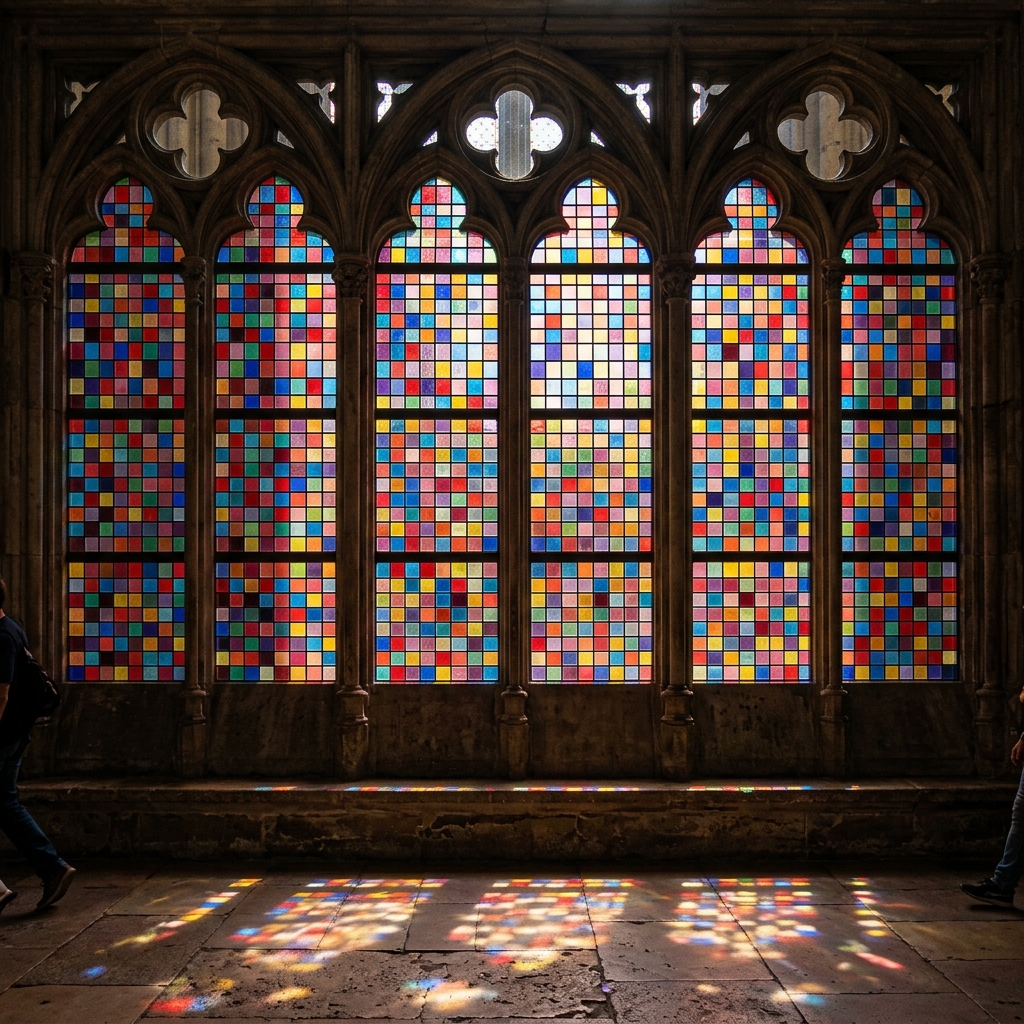
Gerhard Richter's modern stained glass window — 11,500 squares in 72 colors
Bible Windows (c.1260)
The oldest stained glass windows in the cathedral, dating from around 1260 AD. These tell biblical stories in vivid reds, blues, and golds — including scenes from the Old and New Testaments.
They survived both time and war because they were removed before the WWII bombings and hidden in salt mines for safekeeping.
Clerestory of the choir
Bavarian Windows (1848)
Donated by King Ludwig I of Bavaria during the 19th-century completion campaign, these five enormous windows depict scenes from the life of Christ. They represent the finest stained glass of the Romantic era.
South aisle of the nave
Adoration Window (c.1310)
One of the finest examples of medieval stained glass artistry, depicting the Adoration of the Magi — fitting imagery for the cathedral that houses the relics of the Three Kings.
North aisle chapel